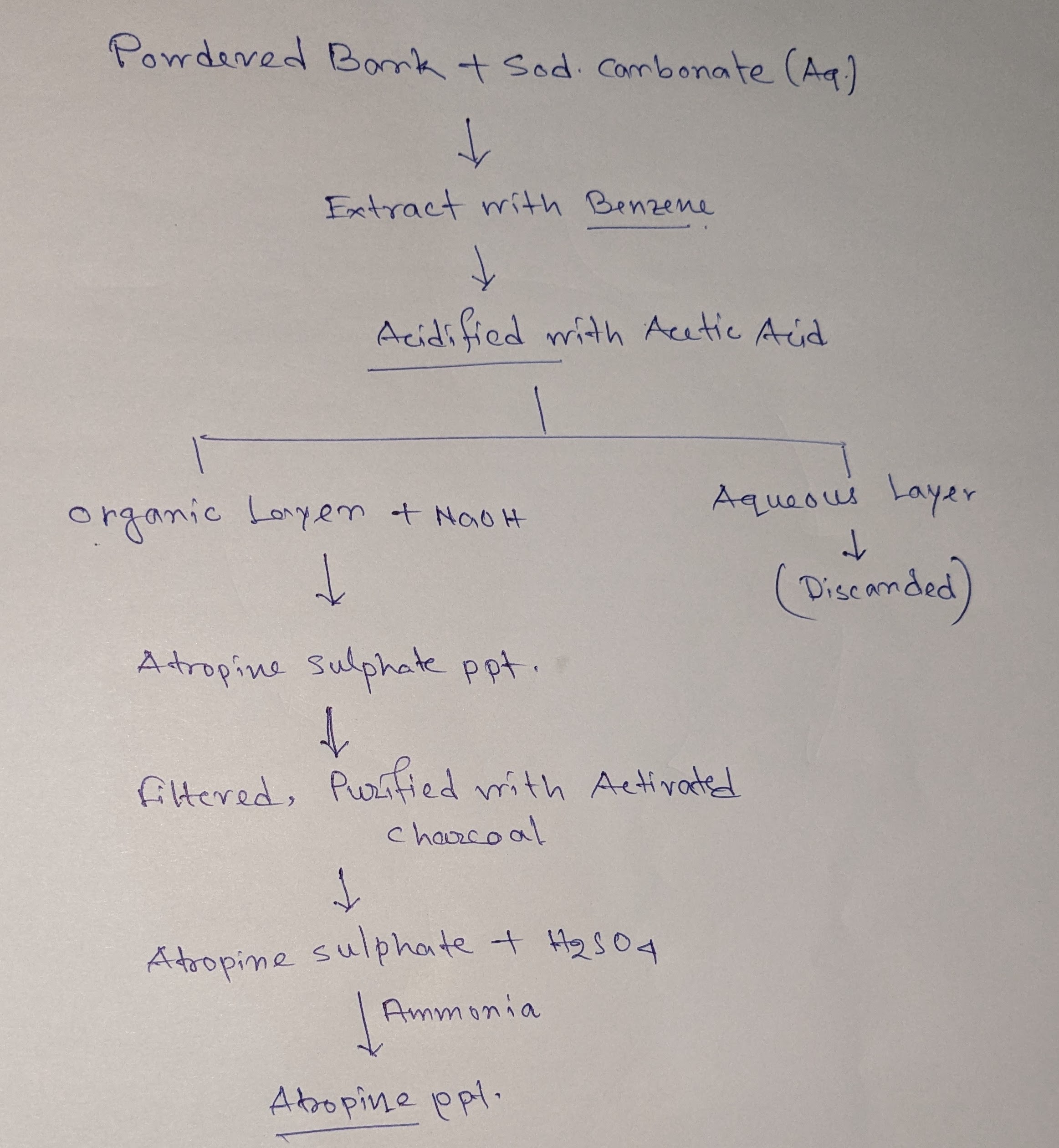
Isolation & identification of atropine & Quinine Isolation & identification of Atropine Isolation: Moisten the powdered bark with an aqueous solution of sodium carbonate and extract it with ether or benzene. The free alkaloids are extracted from the solvent and acidified with acetic acid. Discard the aqueous layer. Add sodium hydroxide to the organic layer to precipitate atropine sulfate. Filter, recrystallize, and purify the crystals with activated charcoal. Dissolve the atropine sulfate in dilute sulfuric acid and make it alkaline with ammonia. Atropine will precipitate as crystals. Wash and dry them at 45-55°C. Identification: Vitali-Morin Test: Atropine + Small Amount of Con. HNO3 Evaporated to dryness in Waterbath. Residue is dissolved in 1 ml Acetone and few drops of freshly prepared Alcoholic KOH, Observation: Violet Colour (Tropane Neuclus) Isolation & identification of Quinine Isolation Here are some steps for isolating ...
IDENTIFICATION of GLYCOSIDES Chemical Test for Anthraquinone Glycosides Borntrager's Test: Process : Drug + Dil. H2SO4 + Ferric Chloride Boil in Water Bath and then cool Filter Extract with CCl4/Benzene Ammonium Sol Added Observation : Pink or Red Colour confirms the presence of Anthraquinone Moiety Chemical Test for Cardiac Glycosides Keller-kiliani test - Alcoholic extract of drug added with 3 ml of GAA. Added few drops of FeCl3 solution Added Concentrated H2SO4 OBSERVATION: Reddish brown layer is formed, which turns bluish green after standing due to the presence of Digitoxoside.
General Method OF Isolation of Glycoside Glycoside is a molecule in which a sugar (Glycone part) is attached to a Non-sugar (Aglycone) functional group via a Glycoside bond ( O/S/N/C). upon hydrolysis , glycosides are divided into a non – sugar group ( which have some pharmacological Action ) and a sugar moiety, which don’t have any pharmacological action. Example: Anthraquinone, Coumarin, Flavonoid glycosides. Isolation Sta-otto method Find me powdered drag containing glycoside is extracted by successive extraction in a soxhlet apparatus with alcohol as solvent. The thermolabile glycoside should be extracted at below 45 degree Celsius. The extract is treated with lead acetate to precipitate tannins and filtered it. To the filtrate hydrogen sulphide gas is passed, The excess of lead acetate is precipitated as lead sulphide. Pure component is determined by the spectroscopy method.

.png)

Comments
Post a Comment